Mixer Truck Embroidery Review for Small Business Merch
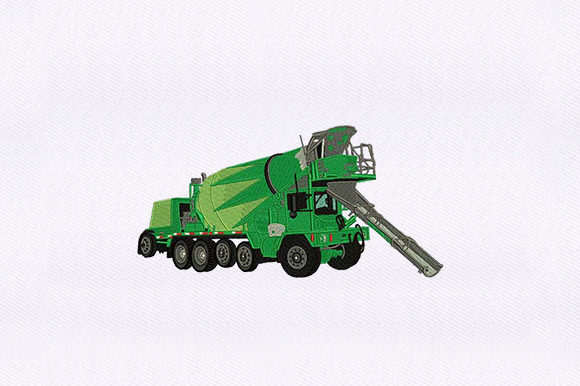
As an embroidery designer who has spent years digitizing and stitching designs for commercial clients, I approach every new machine embroidery design with a critical eye. It is not just about whether it looks pretty on a screen; it is about how it performs on a cap, a tote bag, or a staff uniform after fifty wash cycles. Today, I am reviewing the Mixer Truck design, a piece categorized under Transportation that holds significant potential for small business merch and branded patch applications.
My first impression of the Mixer Truck is that it strikes a balance between industrial utility and approachable charm. The description promises a "high-quality embroidery" that is "detailed," which immediately raises flags for me regarding stitch density and scale. In the world of commercial embroidery, detail is a double-edged sword. While it adds realism and premium value to a finished product, it can become a muddy mess if stitched too small or on the wrong fabric texture. Visually, this design feels robust and grounded, making it an excellent candidate for brands that want to convey reliability, movement, or construction-themed aesthetics without losing a handmade touch.
Real-World Application for Brand Identity
When considering where to deploy the Mixer Truck, I immediately think beyond standard t-shirts. For a local concrete company, a landscaping business, or even a boutique bakery that uses industrial-chic branding, this design serves as a powerful anchor for brand identity. Imagine this stitched as a left-chest logo on heavy-duty work shirts. The transportation theme naturally aligns with logistics and service industries, but its graphic nature allows it to cross over into lifestyle brands as well.
One of the strongest use cases I see is for embroidered patch production. Patches are currently dominating the small business merch landscape because they offer versatility. A customer can buy a Mixer Truck patch and apply it to a denim jacket, a backpack, or a hat later. This extends the life of your design assets significantly. If you run an Etsy shop or a creative studio, selling these as standalone items or as add-ons to custom apparel orders can drastically increase your average order value. The detailed nature of the design suggests it would look particularly striking as a woven label on the hem of a tote bag or as a accent on the pocket of a canvas apron.
Evaluating Performance on Various Substrates
The product description states that this digital embroidery file will look great on "any fabric or clothes." As a professional, I must advise caution here. No single design truly works perfectly on every fabric without adjustment. The success of the Mixer Truck depends heavily on your choice of stabilizer and the specific material you are stitching on.
- Cap Embroidery: Stitching on the curved front of a baseball cap requires careful attention to push and pull factors. If the Mixer Truck has wide spanning stitches in the mixer drum area, you may need to adjust the density or add underlay to prevent puckering on the structured crown of a cap.
- Tote Bag Design: Canvas and heavy cotton twill are ideal for this type of imagery. The texture of the bag complements the mechanical lines of the truck, creating a rugged, durable look that customers love for grocery runs or beach days.
- Apron Embroidery: For cafes or workshops, an apron featuring this transport motif adds a playful yet professional element. However, ensure the thread colors contrast well against dark navy or black aprons, which are common in food service.
- Work Shirts: On polo shirts or button-downs, verify that the detail level does not overwhelm the smaller chest area. You might need to scale the design down, which brings us to the issue of resolution.
Critical Considerations for Production
Before you commit to running a batch of fifty uniforms or hundreds of patches, there are technical hurdles to clear. The description mentions "detailed embroidery," which often implies high stitch density. High density can lead to stiff patches that do not drape well, or worse, needle breaks during production. My primary recommendation is to test it in black and white first. Removing color variables allows you to see the structural integrity of the stitching. Does the outline hold up? Are the small details in the cab of the truck distinct, or do they blend together?
You must also check if the design works at a small patch size. Many buyers want mini-patches for sleeve details or collar tabs. If the Mixer Truck loses its definition when scaled below three inches, it is not suitable for those applications without re-digitizing. Furthermore, inspect the spacing between elements. Tight spacing can cause thread bunching, especially on textured fabrics like fleece or pique knit.
Another vital step is confirming the hoop size requirements. While the description does not specify exact dimensions, you must ensure your machine's hoop can accommodate the design, especially if you are planning to stitch multiple units in a gang-run setup. Always create a printable mockup for client approval before cutting into expensive inventory. Show them how the Mixer Truck looks on a dark uniform versus a light one. Visual consistency is key to maintaining professionalism.
Enhancing Customer Trust and Product Value
Ultimately, the goal of using a design like Mixer Truck is to elevate the perceived value of your goods. A well-executed embroidery signals quality. It tells the customer that you care about the details, which translates to trust in your brand. Whether you are a florist adding a branded tag to a delivery van cover or a pet brand creating durable gear, the tactile nature of embroidery adds a layer of luxury that printed graphics cannot match.
This design supports handmade product narratives beautifully. In an era of mass-produced fast fashion, offering a item with a unique, stitched transportation motif appeals to buyers looking for authenticity. It transforms a generic garment into a statement piece. However, remember that the "high-quality" claim in the product description is only realized through your execution. Your choice of thread colors—perhaps opting for metallic threads to highlight the chrome aspects of the truck, or matte threads for a vintage look—will define the final aesthetic.
Finally, a crucial reminder for all commercial users: always confirm commercial licensing before business use. Just because you purchase a digital embroidery file does not automatically grant you the right to sell unlimited finished goods. Check the terms provided by the designer to ensure you are protected legally while building your merchandise line.
In conclusion, the Mixer Truck offers a versatile foundation for a variety of Transportation themed projects. With careful testing regarding stitch density, fabric compatibility, and sizing, it can become a staple in your catalog of Embroidery products. Treat it not just as an image, but as a component of your broader brand strategy, and it will serve your business well.